HTTP Request/Response Overview
HTTP stands for Hypertext Transfer Protocol and is the networking protocol used to deliver virtually all files and even data (collectively called "resources", which are chunks of information that can be identified by their URLs) from servers on the World Wide Web. HTTP, which usually takes place through TCP/IP sockets, is used to transmit resources, not just files. While the most common kind of resource is a file, a resource may also be a dynamically generated query result (as is the case for data returned by the eBillingHub Data Service).
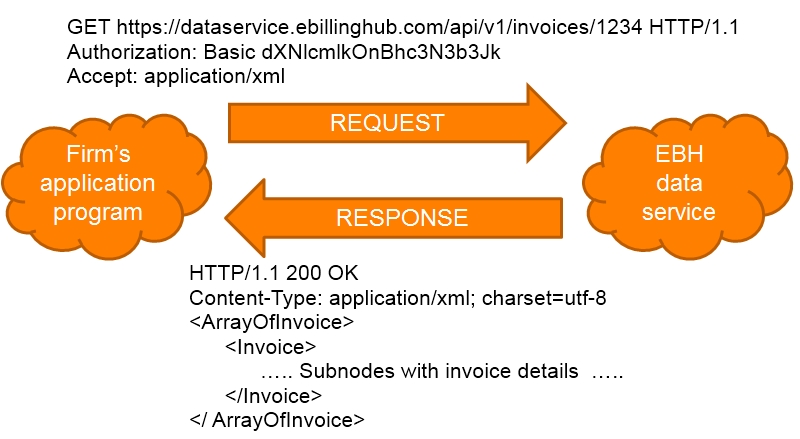
Browsers or other HTTP application client programs send an HTTP request message consisting of a URL, parameters, headers and, optionally, data to a server. The server sends back an HTTP response message with a status code and message, headers and data.
The client programs or browser interact with eBillingHub Data Service via standard HTTP requests and responses as illustrated in the following image. Additional help pages describe the eBillingHub Data Service requests and responses in more detail.